Nenya
The White Ring that holds back time within the golden wood.
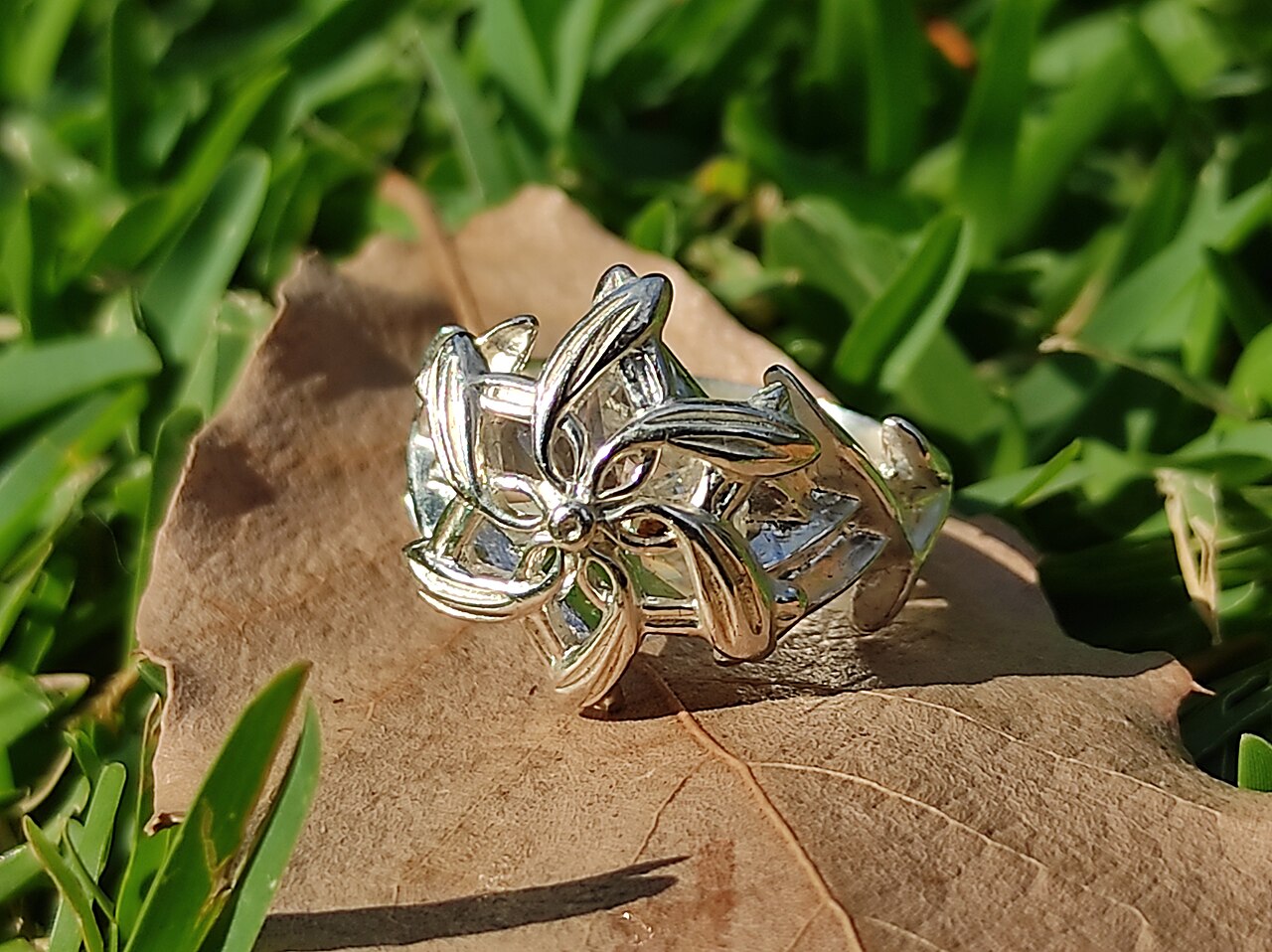
Nenya, known as the Ring of Adamant or the White Ring, is one of the three Elven Rings forged in Eregion during the Second Age. Unlike the One Ring which was designed for war and dominion, Nenya was crafted by Celebrimbor specifically to preserve and protect, shielding the realm of Lothlórien from the ravages of time and decay. It is worn exclusively by Galadriel, Lady of Light, whose power is amplified by the ring to create an enchantment that keeps her domain in a state of timeless beauty.
As one of the Three Rings, Nenya remains uncorrupted by Sauron's influence because it was never touched by his hand. However, its existence is inextricably linked to the One Ring; as long as the Dark Lord held the One Ring, the power of the Elven rings was limited and bound to his will. When the One Ring was destroyed, Nenya's purpose shifted from preservation against decay to a final farewell, marking the end of the Age of Elves in Middle-earth.
- Type
- Elven Ring of Power
- Elemental Association
- Water (Adamant/Diamond)
- Primary Wielder
- Galadriel
- Primary Effect
- Preservation and Protection against Decay
- Creation Era
- Second Age, Eregion
- Current Status
- Returned to the Undying Lands
Lore & Background
Forged by Celebrimbor in secret after Sauron had deceived the Elves with his guise as Annatar, Nenya was forged from gold and set with a white stone. It is distinct from Narya (the Red Ring) and Vilya (the Blue Ring) in that it does not grant power over others or inspire heroism through fiery spirit; instead, its magic is subtle, defensive, and restorative. Galadriel used this artifact to weave a veil of enchantment around Lothlórien, ensuring that the forest remained untouched by the blight of Mordor and the slow erosion of years. Within its borders, time seemed to stand still, allowing the Elves to maintain their memories and culture long after they had faded elsewhere.
The ring's power is deeply tied to the will of its bearer. Galadriel wielded it with a gentle but iron resolve, refusing to let her people succumb to despair or the temptation of domination. However, the rings' existence was always precarious. As long as the One Ring remained lost or in other hands during the Third Age, the Three could not be fully used for their intended creative purposes without fear of exposure. The moment Frodo Baggins claimed the One Ring and Gollum subsequently fell into Mount Doom with it after biting off Frodo's finger, the power of the Elven Rings waned instantly, signaling that their work was done and the Age of Men had begun.
In Their Own Story
The air in Lothlórien did not merely hang heavy; it shimmered with a suspended stillness, thick with the scent of silver-leaved mallorn and starlight that seemed to pool on the ground. Galadriel stood before the Mirror, her hand hovering just above the water's surface, yet she was touching something far more profound: the invisible, taut threads of time itself. Around her wrist, a faint, cool radiance caught the eye—a band of mithril that held the very essence of winter's purity and the deep, unyielding clarity of a mountain stream. Through Nenya, the creeping shadows of Mordor were not just kept at bay; they were severed from reality, halted before they could so much as wither the golden grass of Tindrock. She bore the crushing weight of ages pressing against her spirit, an iron resolve wrapped in gentleness, ensuring that beauty would not fade while she held the ring fast.
Reader's Guide
Nenya operates as a vessel for preservation magic, uniquely designed to arrest the natural decay of time and protect a realm from external corruption. Unlike rings built for war or domination, it functions by weaving an enchantment that creates a pocket of timeless stillness, shielding its wearer's domain from the blight of Mordor and the slow erosion of years. Its power is subtle but absolute within its bounds: it halts aging, maintains the vitality of the land, and keeps memories vivid against the forgetting of the world outside. However, this preservation is conditional; as long as Sauron holds the One Ring, Nenya's work is a holding action against an inevitable end. Once the Dark Lord is defeated, the enchantment dissolves, signaling that the Age of Elves has concluded and the land must now face the flow of time once more.
Did You Know?
- Nenya is forged from gold and set with a white stone, often described as an adamant or diamond-like gem.
- The name 'Nenya' means 'Ring of Water' in Quenya, reflecting its association with preservation and the element of water.
- Galadriel was the only one among the Three Ring bearers who never used her ring to dominate others or build an army.
- Upon the destruction of the One Ring, Galadriel's power faded so quickly that she feared Lothlórien would vanish instantly if not for the departure of the Elves.
The Evolution of Galadriel
In this television adaptation, Galadriel undergoes a profound transformation from a fierce warrior to the wise elder stateswoman known from later literature. Initially depicted as possessing an 'Amazon disposition,' she is driven by the loss of her brother Finrod and a relentless hunt for Sauron. Her journey in the first season involves being deceived by the Dark Lord while he disguises himself as the human Halbrand, leading to significant personal humbling. The narrative arc explores how these mistakes force her to reevaluate her future path. By the second season, the story delves into her complex relationship with Nenya, one of the Rings of Power. Visually, the production honors Tolkien's description of her hair being 'lit with gold' by utilizing wigs featuring both gold and silver-plated strands. This character arc bridges the gap between her youthful intensity in the Second Age and her serene authority during the events of The Lord of the Rings.
Celebrimbor and the Forging of Power
Celebrimbor serves as a central figure, particularly highlighted as the principal protagonist of the second season. As an Elven-smith and descendant of Fëanor, he is driven by a desperate ambition to create works that outshine his grandfather's legendary Silmarils. His character is described as vain and ambitious, drawing comparisons to J. Robert Oppenheimer due to the catastrophic potential of his creations. Tragically, Celebrimbor falls victim to deception by Sauron, which leads him to forge the Rings of Power under false pretenses. This narrative thread explores the dangerous intersection of artistic genius and manipulation, illustrating how even the greatest craftsmen can be misled. His storyline is pivotal in depicting the major events of the Second Age, specifically the forging process that sets the stage for the rise of evil and the eventual fall of Númenor.
The Broader Elven Hierarchy
Beyond the main protagonists, the series expands on the roles of other significant Elven figures mentioned in Tolkien's writings. Gil-galad, the High King ruling from Lindon, is portrayed as possessing a unique gift of foresight, allowing him to sense the rising pulse of evil before others can perceive it. This prescient ability adds depth to his leadership during turbulent times. Additionally, Círdan the Shipwright appears as the master of the Grey Havens and the bearer of Narya, while Celeborn is introduced as Galadriel's husband, a warrior lord whose deep longing for her helps him survive presumed death until their reunion in the third season. These characters collectively flesh out the political and social landscape of the Elves, moving beyond traditional royal depictions to include diverse perspectives on leadership, craftsmanship, and personal sacrifice during the Second Age.
Production Origins and Setting
This series was developed by J.D. Payne and Patrick McKay for Amazon Prime Video, marking a significant expansion into Tolkien's history set thousands of years before the original novels. The production initially took place in New Zealand to maintain visual consistency with Peter Jackson's film trilogies, utilizing local talent alongside international actors from Australia, the UK, and the US. However, future seasons shifted production to the United Kingdom to better accommodate a cast that was predominantly British. While originally expected to be a direct continuation of the films, Amazon clarified that their agreement required a distinct separation, though showrunners aimed for returning characters to visually align with their film counterparts. The series covers major historical events such as the forging of the Rings and the Last Alliance, relying heavily on material from the appendices of The Lord of the Rings.
Gallery
Frequently Asked Questions
What is Nenya?
Nenya is the White Ring of Power forged by Celebrimbor during the Second Age and entrusted solely to Galadriel. It stands as one of the Three Rings made for the Elves, distinct from the lesser rings crafted under Sauron's direct influence.
What are Nenya’s powers?
This ring grants its wearer the ability to preserve and protect their realm from the ravages of time and decay. Galadriel used it to maintain Lothlórien in a state of timeless beauty and shield her people from external threats.
Is Nenya corrupted by Sauron?
No, because Celebrimbor created it without Sauron’s direct touch, though its power remained linked to the One Ring until that artifact was destroyed. It never granted dominion over others or turned the wearer toward evil like the lesser rings did.
Why is Nenya important in Lothlórien?
The ring allowed Galadriel to create a sanctuary where time moved differently, keeping the forest safe from shadow and aging during the Third Age. This protection made her domain a crucial refuge for Frodo’s fellowship before they faced Mount Doom.
What happened to Nenya after the War of the Ring?
Once the One Ring was unmade, Nenya lost its potency and purpose within Middle-earth. Galadriel departed for the Undying Lands immediately afterward, taking the ring with her so it would never be used again in mortal lands.