Rohan
The thundering hooves of the Horse-lords bring hope where shadows fall.
Rohan, known in its own tongue as the Riddermark or the Land of the Horse-lords, unfolds as a sea of golden grass beneath wide, windswept skies. Nestled between the shadowed peaks of the White Mountains to the south and the River Isen to the east, it serves as the premier cavalry force of Middle-earth's free peoples. The Rohirrim are legendary for their speed, discipline, and unbreakable bond with their horses, which they treat as kin rather than mere beasts of burden.
Though often overshadowed by the grandeur of Gondor or the ancient wisdom of Rivendell, Rohan plays a pivotal role in the War of the Ring. Its people are simple, hearty folk who value courage and loyalty above all else. When the shadow of Mordor lengthens, it is the thundering charge of the Rohirrim that often turns the tide of battle, proving that even in the darkest times, the spirit of freedom can still gallop across the plains.
- Capital City
- Edoras
- Ruling House
- House of Eorl
- Primary Military Unit
- Heavy Cavalry (The Rohirrim)
- Cultural Symbol
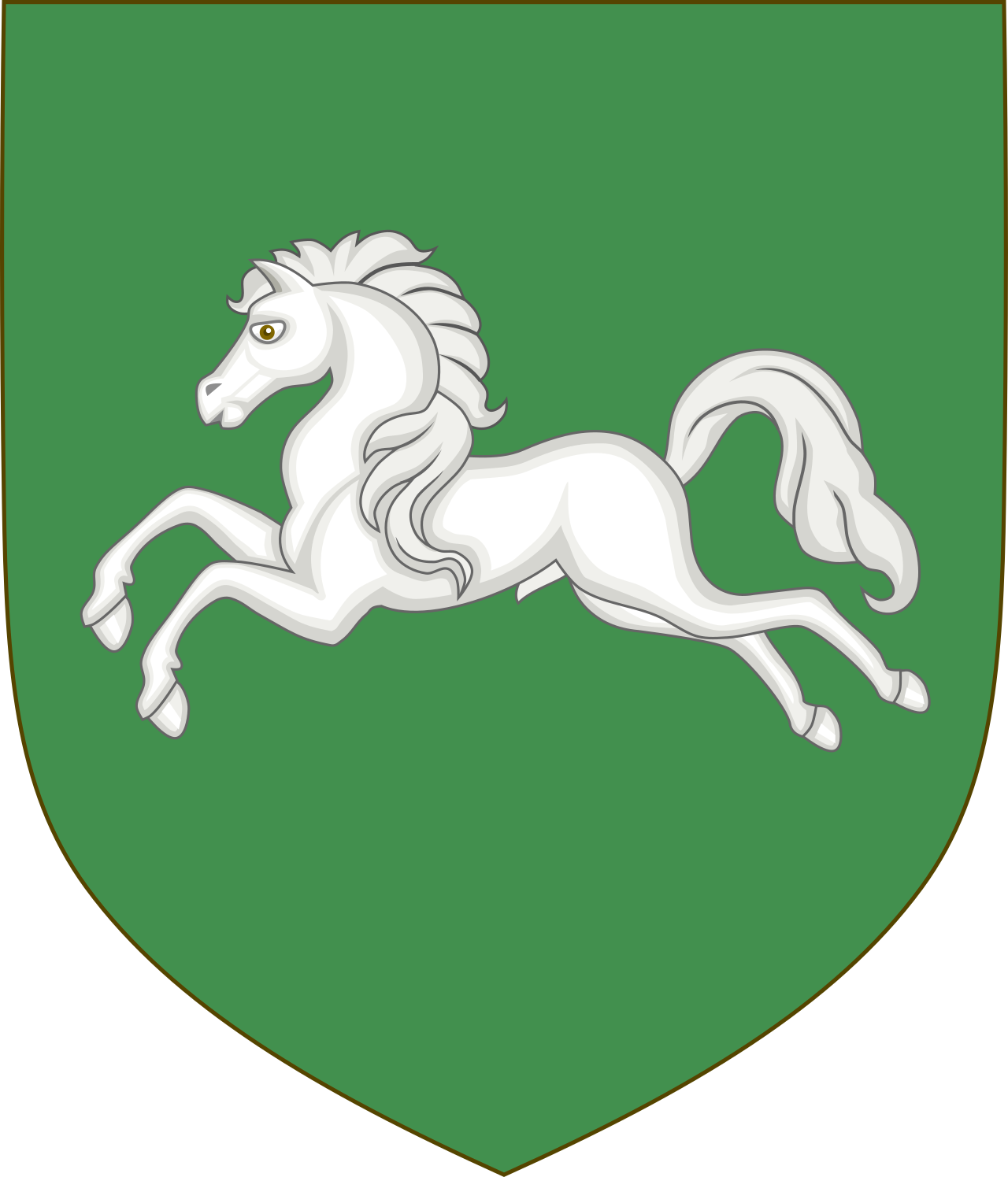
- White Horse on Green Field
- Language
- Rohirric (closely related to Old English)
- Key Ally
- Kingdom of Gondor
- Geography
- Vast grasslands, rolling hills, and the White Mountains
Lore & Background
The history of Rohan is deeply intertwined with that of Gondor. Centuries before the War of the Ring, the Steward of Gondor, Cirion, called upon Eorl the Young to aid in a desperate battle against the Wainriders. In gratitude for their victory, Cirion granted the northern province of Calenardhon to Eorl and his people, who renamed it Rohan. This alliance was sealed by an oath that has never been broken: Gondor would protect the southern borders while Rohan stood ready with its cavalry to answer any call for aid.
The culture of the Rohirrim is defined by their horses. They do not merely ride them; they speak to them, name them, and share a spiritual connection that allows for feats of endurance and speed unmatched by other peoples. Their society is feudal but egalitarian in spirit, with kings who rule alongside the people rather than above them. Their halls are filled with songs of ancient battles and heroes, preserving their history through oral tradition. The White Horse banner flying over Edoras remains a beacon of defiance against the encroaching darkness.
In Their Own Story
The wind howled across the Pelennor Fields, carrying the scent of ash and fear. King Théoden sat tall upon Snowmane, his golden hair whipping like a banner in the gale. Around him, ten thousand riders waited in silence, their breath misting in the cold dawn air. They were not merely soldiers; they were brothers, sons, and fathers who had ridden from the distant Riddermark to save a people that was not their own.
"Ride now! Ride now!" the King's voice cracked like thunder, shattering the stillness. "To Minas Tirith! To death!" With a roar that shook the very earth, the wall of riders surged forward. Hooves hammered the ground in a rhythm older than time, a rolling thunder that drowned out the screams of war. As they crested the hill, the sun broke through the clouds, illuminating the white horses and the shining spears, a sudden, blinding light in the midst of darkness.
Reader's Guide
Rohan is a kingdom defined by its martial prowess on horseback and its enduring alliance with Gondor. Its primary goal during the War of the Ring was to defend its northern borders against Mordor's encroachment while honoring the ancient Oath of Eorl. Key locations include Edoras, where King Théoden rules from the Golden Hall Meduseld, and the fertile meadows of Harrowdale that sustain the kingdom.
Did You Know?
- The Rohirric language is actually a translation of Old English in Tolkien's legendarium, reflecting their cultural parallel to the Anglo-Saxons.
- While famous for their cavalry, the Rohirrim do possess significant infantry forces, such as the men of the Westfold who famously defended Helm's Deep on foot.
- The name 'Rohirrim' comes from the Sindarin word for 'Horse-lords', a term coined by Gondorians, while they refer to themselves as the Eorlingas; their cavalry regiments are known as eoreds.
- King Théoden's beloved horse, Snowmane, was tragically killed not at Pelennor Fields, but earlier during the Battle of Helm's Deep when he was struck by an arrow while carrying his king into battle.
Origins and Production Context
The Lord of the Rings: The War of the Rohirrim emerged as a strategic initiative in June 2021, designed to secure New Line Cinema's adaptation rights before they expired. This anime fantasy film is set approximately two centuries prior to Peter Jackson's cinematic trilogies, delving into the history of Rohan found within J.R.R. Tolkien's appendices. The project was helmed by renowned director Kenji Kamiyama, with a screenplay developed by Jeffrey Addiss and Will Matthews before being re-written by Phoebe Gittins and Arty Papageorgiou. A unique creative decision involved centering the narrative on Helm Hammerhand's daughter, Héra, who remains unnamed in Tolkien's original texts. Sola Entertainment handled the traditional 2D animation, drawing visual inspiration from Jackson's live-action films to maintain continuity. Executive producers Peter Jackson and Fran Walsh, alongside Philippa Boyens, ensured a connection to the established franchise legacy while exploring this untold chapter of Middle-earth history.
Narrative Arc and Key Events
The story unfolds through the narration of Éowyn, recounting the tragic conflict between King Helm Hammerhand and the Dunlendings. The war ignites when Helm unintentionally kills Freca, a neighboring lord attempting to force his son Wulf's marriage to Helm's daughter, Héra. Following this incident, Wulf vows revenge, eventually rising as the High Lord of the Dunlendings and launching a siege on Rohan. The narrative highlights Héra's bravery as she rescues her people from Isengard, discovers treachery within their own ranks involving Lord Thorne, and witnesses the brutal murder of her brothers by Wulf. As winter sets in during the Hornburg siege, Helm leads desperate night raids before sacrificing himself to ensure his daughter's escape. The conflict concludes with Héra challenging Wulf to single combat on a siege tower, ultimately choking him to death with a shield while Fréaláf uses Helm's armor to rout the remaining enemy forces.
Character Dynamics and Themes
The film explores complex familial and political dynamics through its central characters. Brian Cox portrays Helm as a hot-tempered yet protective king whose lineage ends tragically, serving as a lesson on power and responsibility. In contrast, Gaia Wise voices Héra, a rebellious tomboy described by the cast as closer to Hayao Miyazaki's heroines than previous female figures in the franchise. Her character arc emphasizes her desire for adventure over rulership, leading her to reject political marriage and eventually ride off with her aunt Olwyn after the war. The antagonist Wulf, voiced by Luke Pasqualino, is distinct from typical fantasy villains as a human driven by personal vengeance rather than dark magic or sorcery. Producer Philippa Boyens noted that this human element makes him more dangerous and relevant to real-world crises, grounding the epic conflict in relatable emotional stakes.
Release Performance and Critical Reception
The film premiered on December 3, 2024, with international theatrical releases following shortly after, culminating in a United States debut on December 13. Produced by Warner Bros. Pictures, the movie operated on a relatively modest budget of $30 million but struggled to recoup costs, grossing only $20.7 million worldwide upon its initial run. Critical reception was mixed, with reviewers offering varied opinions on the adaptation's execution and storytelling approach. Despite the financial underperformance compared to previous entries in the franchise, the project succeeded in expanding the cinematic lore of Middle-earth by introducing new characters like Héra and exploring the historical period leading up to the events of The Hobbit and The Lord of the Rings trilogies.
Gallery
Frequently Asked Questions
What is Rohan in Middle-earth lore?
Rohan is a kingdom also known as the Riddermark, located between the White Mountains and the River Isen. Its inhabitants are famous horse-lords who provide the primary cavalry force for the free peoples of the region.
Who leads the people of Rohan?
The realm is ruled by the House of Eorl, with their seat of power located in the capital city of Edoras. This royal lineage traces back to ancient agreements made between their ancestors and the Kingdom of Gondor.
What makes the Rohirrim unique warriors?
The soldiers are legendary for their heavy cavalry tactics, relying on speed and a deep partnership with their mounts. They treat these animals with familial respect instead of seeing them simply as tools for war.
How does Rohan fit into the War of the Ring?
The kingdom serves as a pivotal ally to Gondor, sending reinforcements that help turn the tide against Sauron's armies. Their cavalry charges at key battles like Helm's Deep and Pelennor Fields are crucial for the defense of Middle-earth.
What language is spoken in Rohan?
The citizens speak Rohirric, a dialect that shares strong similarities with Old English within the story's context. This linguistic heritage emphasizes their distinct cultural identity compared to other nations like Gondor or the Shire.